IRREVERSIBILITY
Yağmur Çalış
12/21/2025
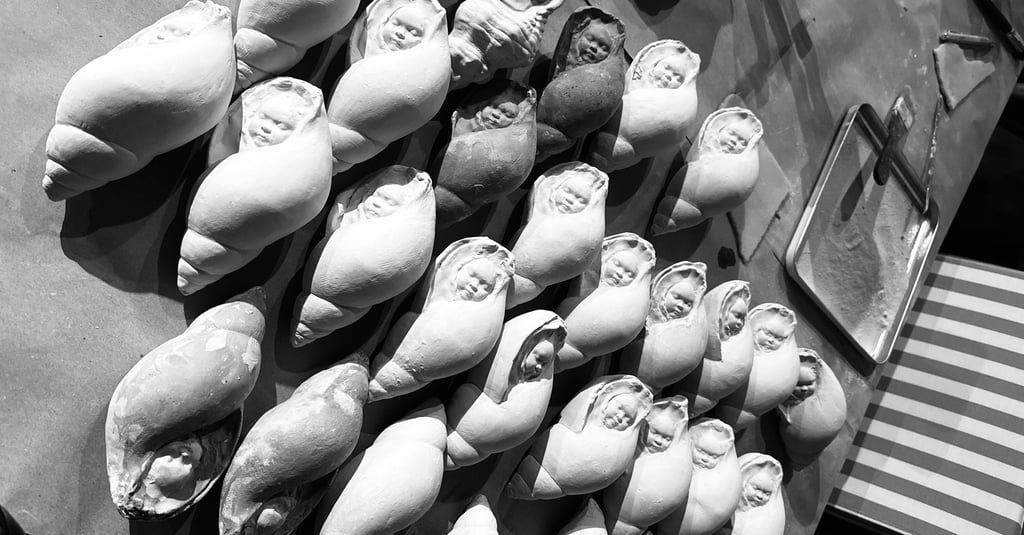
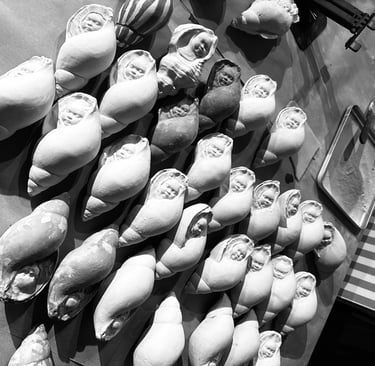
When clay is held, it contains infinite possibilities.
It has not yet become anything. Every direction is open. Form, scale, orientation, and balance have not yet been determined. This indeterminacy does not so much make clay flexible as it makes it dense, because all possibilities are present at once.
While working with clay, these possibilities rest in the palm of the hand. With each intervention, certain potentials gain strength while others recede. Every touch brings one possibility forward while quietly excluding others. What often goes unnoticed is that as form emerges, other forms are simultaneously being relinquished.
This relinquishing is the unseen part of the process. While clay is still wet, it may appear to allow return. Yet this return is not limitless. Each intervention slightly narrows the field. Clay begins to carry the trace of decision.
Fire is not a sudden rupture in this process, but the moment in which decisions already established become visible. The act of firing is not an ending where infinite possibilities close, but a threshold where the chosen one gains weight. This is where irreversibility begins.
From this point on, clay no longer asks to be corrected, but to be carried. Cracks, imbalances, or unexpected outcomes are not concealed. They remain as part of the structure. A decision is not withdrawn; it enters circulation along with the work.
Irreversibility, for me, is not a harsh break. It is the responsibility of the possibilities once held in the hand at the beginning of the process. After this stage, a work does not turn into something else. It exists as it is.
What makes this process indispensable is this:a piece of clay holds infinite potential.
But each work carries only one of them.